Josh Lerner’s New White Paper Proposes a Revolutionary Approach to Strengthening Democracy7/24/2024  Josh Lerner, Co-Executive Director of People Powered, has released a white paper titled From Waves to Ecosystems: The Next Stage of Democratic Innovation, commissioned by the Stavros Niarchos Foundation's Ithaca Initiative. The paper argues for a shift from isolated democratic innovations to integrating diverse democratic practices into cohesive ecosystems to address global democratic crises. It proposes expanding our understanding of democracy by revisiting its historical diversity, building balanced democratic ecosystems rather than competing waves, and supporting a just transition by overcoming current unhealthy practices. The paper was launched on June 26th with a discussion featuring global democracy experts. Read more in the blog post below and find the paper here!
0 Comments
 NCDD member and former board chair, Martín Carcasson’s has shared his working paper, "Imagining the Robust Deliberative City," which highlights the need for meaningful public discourse in an era of eroding trust and rampant misinformation. He distinguishes between reactive public opinion and thoughtful public judgment, advocating for the latter. Carcasson argues that fostering robust public judgment is best achieved at the local level, where cities and counties can model democratic engagement through inclusive, collaborative discussions. He provides a road-map for local governments to build capacity for democratic engagement, emphasizing the creation of deliberative spaces, inclusivity, citizen education, and trust-building. Read more in the blog post below and find the full working paper here.
Participate in Social Pinpoint's 'Engaging for Equity' Survey: Share Your Insights by July 8th7/3/2024  NCDD friends, Social Pinpoint, announced a 12-day survey aimed at identifying challenges and successful practices for engaging underrepresented community members. The survey seeks to gather diverse opinions to address equity with innovative solutions. Participants' anonymous insights will contribute to a report on inclusive engagement practices and be presented at the TRB's 2nd Conference on Advancing Transportation Equity. The survey closes on Monday, July 8th, and participants will receive a copy of the final report. Read the blog post below and take the survey here.
 As Pride Month comes to a close, the work of Invisible Histories is especially important in preserving and honoring the diverse and often overlooked stories of LGBTQ individuals in the region, ensuring their experiences and contributions are recognized and remembered. Invisible Histories is a nonprofit organization dedicated to collecting, researching, and educating about LGBTQ history in the Deep South, viewing archiving as a resistance to oppression. They focus on community engagement, archiving, education, and professional development, aiming to create intergenerational connections, research opportunities, and a network for LGBTQ historians and archivists in the South. Read the blog post below and check out their website here.
 Weave's Social Trust Index and Map show how different neighborhood traits are linked to social trust. They look at behaviors, intentions, and spaces separately but recognize how they all work together. The data, updated annually from sources like Esri and SafeGraph, is collected locally to be specific and timely. Experts chose data linked to social trust, and Datastory analyzed it into easy-to-understand scores. The Index covers community engagement, intentions, and social spaces to help neighbors connect. Check out the blog post below, read the article, and explore the Social Trust Index Map here.
The National Civic League, an NCDD member organization, released the National Civic Review Spring Edition 2024 and now everyone can access NCR for free! This esteemed quarterly journal offers insights and examples of civic engagement and deliberative governance from around the country. Thanks to Rebecca Trout, NCL’s Program Director for All-America City Award & Communications, for sharing this announcement with the NCDD network! Find the NCR Spring Edition on NCL's site here.
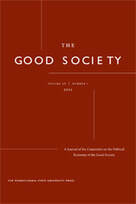 The Good Society: A Journal of Civic Studies welcomes a new editorial team comprising Chad Hoggan, Kara Dillard, and Tanja Hoggan-Kloubert - please join us in wishing them congratulations! The journal focuses on interdisciplinary research to understand and enhance civic society, drawing from fields like political science, sociology, and economics. With a commitment to fostering dialogue across ideological and international divides, The Good Society invites submissions addressing various aspects of civic society, maintaining high scholarly standards and rigorous peer-review processes. Learn more in the post below and here.
The National Civic League, an NCDD member organization, published the Winter 2024 edition of the National Civic Review (NCR). NCDD members receive a digital copy of NCR for free! (Find the access code below.) This esteemed quarterly journal offers insights and examples of civic engagement and deliberative governance from around the country. The Winter edition, created in collaboration with NCDD member org, the Kettering Foundation, includes articles on Truth and Reconciliation Commissions effectiveness, challenges to local journalism, societal division perception survey results, participatory democracy examples, and more.
Thanks to Rebecca Trout, NCL’s Program Director for the DC Office & All-America City Award, for sharing this announcement with the NCDD network! The National Civic League, an NCDD member organization, recently published the Fall edition of National Civic Review (NCR). NCDD members receive a digital copy of NCR for free! (Find the access code below.) This esteemed quarterly journal offers insights and examples of civic engagement and deliberative governance from around the country. Thanks to Rebecca Trout, NCL’s Program Director for the DC Office & All-America City Award, for sharing this announcement with the NCDD network! National Civic Review Fall Edition 2023 – Access Code: NCDD23 This issue of the National Civic Review showcases new and better ways of engaging the public in local decision-making processes. It features ideas about improving the quality and equity of public meetings, making them more satisfying for participants, and linking them to real-world policy outcomes. To access this edition, go to the table of contents where you will be prompted to enter your unique access code: NCDD23. One of the Nation’s Oldest and Most Respected Journals of Civic Affairs Its cases studies, reports, interviews and essays help communities learn about the latest developments in collaborative problem-solving, civic engagement, local government innovation and democratic governance. Some of the country’s leading doers and thinkers have contributed articles to this invaluable resource for elected officials, public managers, nonprofit leaders, grassroots activists, and public administration scholars seeking to make America’s communities more inclusive, participatory, innovative and successful. Find this most recent edition of NCR on NCL's site at: www.nationalcivicleague.org/national-civic-review/issue/fall-2023-volume-112-number-3/  PACE (Philanthropy for Active Civic Engagement) is a member-centric philanthropic laboratory for funders seeking to maximize their impact on democracy and civic life in the United States. Our members share a belief that America will be healthier and more successful, resilient, and productive, if democracy is strong and the office of citizen is treated as central to how it functions. We believe that American democracy will thrive when all of its people are informed and engaged in the process of creating it. PACE’s Civic Language Perceptions Project seeks to understand peoples’ perceptions of the language associated with civic engagement and democracy work. PACE believes all Americans should be informed and empowered to contribute to civic life. PACE conducted a nationally representative survey of 5,000 Americans to understand their perceptions of civic language. 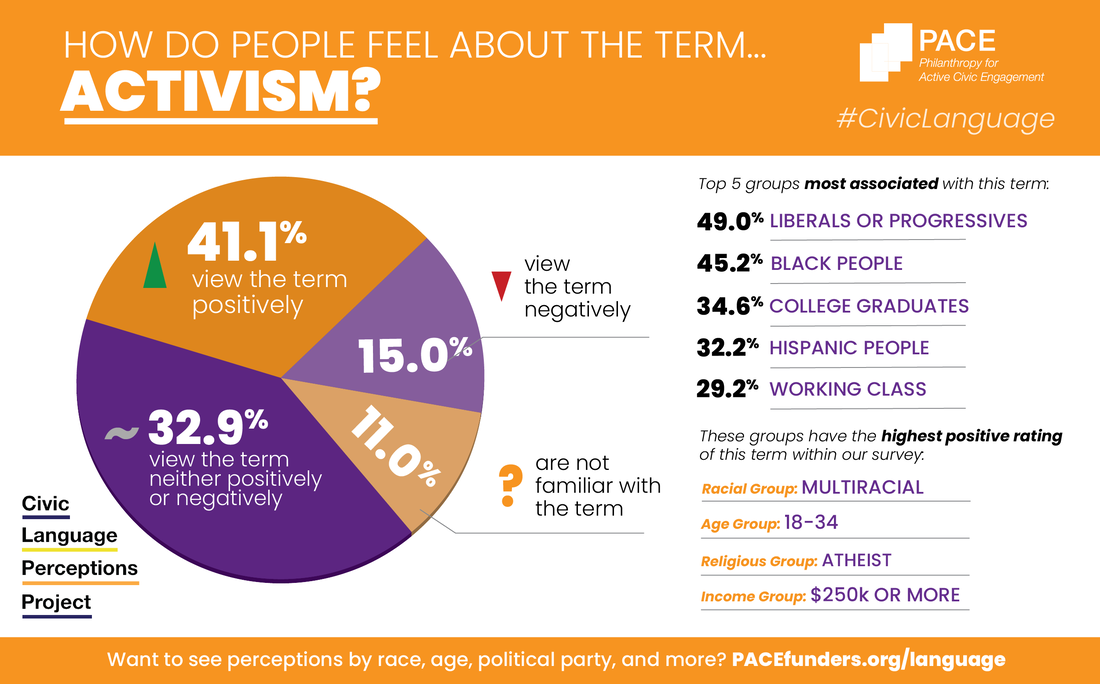 |
Categories
All
|
 RSS Feed
Follow Us
ABOUT NCDD
NCDD is a community and coalition of individuals and organizations who bring people together to discuss, decide and collaborate on today's toughest issues.
© The National Coalition For Dialogue And Deliberation, Inc. All rights reserved.
© The National Coalition For Dialogue And Deliberation, Inc. All rights reserved.