 The Knowledge Network on Climate Assemblies (KNOCA) is hosting a webinar "Climate Assemblies: Emerging Trends, Challenges and Opportunities", on May 2nd from 8:30 - 10:00am Eastern, 5:30 - 7:00am Pacific. While KNOCA is based in Europe, we know there is much to learn from climate assemblies and takeaways on how to further bring citizens' voices into climate governance.
Graham Smith will present insights from an upcoming report on climate assemblies. Erica Hope and Claudia Chwalisz will lead discussions on integrating citizen voices into climate governance. KNOCA aims to enhance climate assembly impact by fostering dialogue among stakeholders and shaping future trends in assembly practice to strengthen climate policy and governance. Learn more in the post below and on KNOCA's site here.
0 Comments
Federation for Innovation in Democracy North America Launches, Plus Citizens' Assembly School4/5/2024  We invite you to check out the newly launched Federation for Innovation in Democracy North America (FIDE NA), which aims to advocate for Citizens' Assemblies and provide technical guidance. They're hosting a Capacity Building School from April 18-20 in DC featuring international experts, and the Global Innovations in Democracy event from April 15-17. Thank you to Marjan H. Ehsassi, FIDE NA Executive Director, for sharing this announcement with the NCDD network! Learn more in the post below and on the FIDE NA site here.
 ICYMI The Participatory Budgeting Project recently shared their Spring newsletter packed with exciting updates and upcoming opportunities. Some highlights include: Join today's webinar "Remaking the Economy: A Policy Vision from the Movement for Black Lives" at 2pm Eastern; vote in PB2 by March 31st to allocate $20,000; explore new resources on the PBP site including relationship/power mapping tool, "The Spectrum of Community Engagement to Community Ownership". More information in the post below.
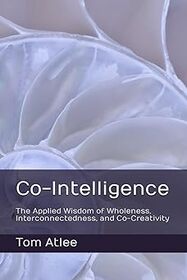 Please join us in wishing congratulations to our long-time NCDD friend, Tom Atlee, on the recent publication of his book "Co-Intelligence - The Applied Wisdom of Wholeness, Interconnectedness, and Co-Creativity"!
This incredible book distills his over 30 years of experience and leadership in co-intelligence work. The book proposes a transformative shift towards co-intelligence as the solution to our global challenges, emphasizing the cultivation of collective wisdom. Join the official book launch event on March 27th. Available in various formats, including a generous gift offer from Atlee - read more below! Have you heard the news?! NCDD is thrilled to announce the launch of our NCDD Working Groups and Exchanges - and you're invited to join! 2024 is already looking to be an important year and there is a lot of energy for dialogue, deliberation, and engagement work. NCDD is uniquely positioned to bring together our collective wisdom, experiences, and passion for change to reflect and collaborate together. Coming out of the 2023 conference, NCDD is excited to be harnessing the collective energy and capacity of this coalition through the formation of working groups that align with key priority areas for the organization, as well as exchanges that will allow the membership to deepen connections. These groups are intended to provide our members with focused opportunities to connect, collaborate, build capacity, and invest in our shared coalition. Current NCDD Working Groups A number of potential focus areas were suggested at the 2023 conference. The NCDD staff and board have determined that these following groups are best aligned with current organization priorities and can also play a key role in building and sustaining NCDD as an inclusive coalition and a thriving organization.
Joining a Working Group Working groups open to all, please fill out this form. While you are not required to be an NCDD member, your support helps make these groups possible - become one today! Current NCDD Exchanges
Joining the Exchange Express your interest in this exchange by filling out this brief form. The form asks for ways you would like to communicate around the exchange, as well as opportunities to present and lead the group. Want to Start a New Exchange? NCDD is excited to support additional exchanges focused on bringing our network together around specific sectors, areas of interest, etc. If you would like to discuss starting a new exchange, reach out to NCDD’s Executive Director, Courtney Breese, at [email protected]. Additional Questions? Please contact NCDD’s Communications Coordinator, Keiva Hummel, at [email protected].  NCDD member organization, the National Civic League, is accepting applications for the 2024 All-America City Award until Tuesday, February 13th! The 2024 All-America City Award will focus on the theme - Strengthening Democracy through Local Action and Innovation. AAC2024 will recognize communities that are finding innovative ways to equitably engage community members in activities that strengthen local democracy, like making it easier to vote, engage in community affairs, and serve in leadership roles. Learn more in the post below and on NCL's site linked here.
Happy Facilitation Week! In honor of this week recognizing the importance of facilitation practice (read more about it a facilitationweek.org), our friend Jason Diceman at Feedback Frames is offering our network an amazing deal on this tool for in person meetings! Learn more below. 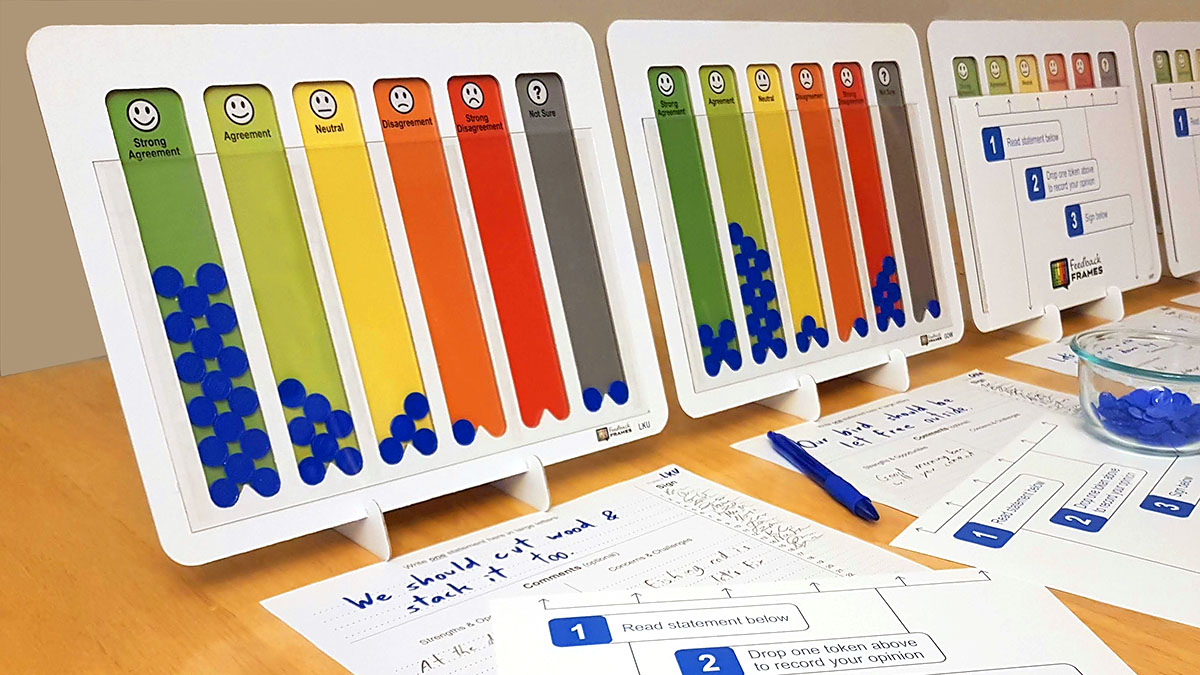 To help support the important facilitation work of NCDD members, Feedback Frames is offering a 40% discount this week only.
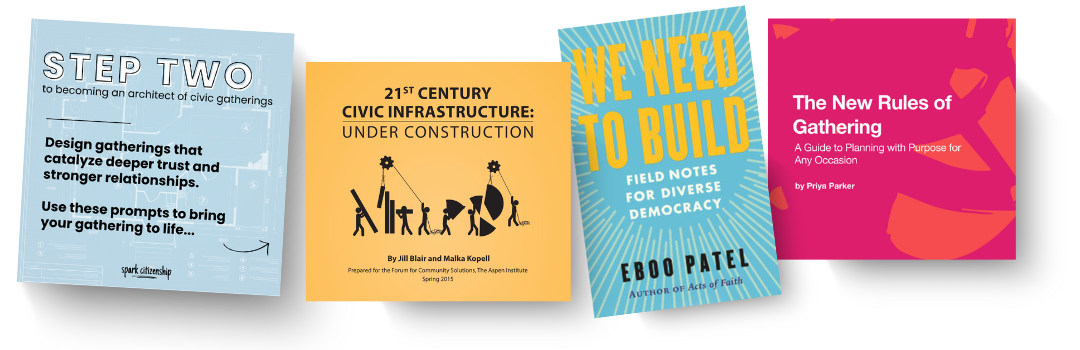 The Participatory Budgeting project is launching the latest version of PB for Orgs toolkit. This event will be held on June 23rd at 1pm PT/4pm ET. About the event:
If you’re already familiar with participatory budgeting, chances are that it’s in the context of a city or government initiative. But the beauty of PB is that it can bring democratic decision-making to any organization—yours included. This is why PBP launched PB for Orgs—an opportunity for organizations to practice participatory democracy and reap the benefits of implementing a PB process, including shared decision-making power and more equitable and effective spending. We recently wrapped up our first-ever PB for Orgs cohort, which brought together folks from a wide range of non-profit organizations to learn about implementing PB. With their feedback, we rethought, revisited, revised, and are extremely excited to share with you Change From Within: A Guide to Running Participatory Budgeting in Your Organization. This launch event is for anyone interested in learning more about what a PB process could do for and look like in their non-profit, collective, or network. After a brief teach-in on PB for Orgs, you’ll learn from PBP staff and partners about their experiences with implementing PB processes and have the opportunity to ask questions about what PB in your organization could look like. In this article, Essential Partners, an NCDD sponsor organization, explores the challenges of adapting to the shift to online engagement, both creatively and effectively! As we continue to rely on virtual spaces to convene due to the Covid-19 outbreak, we may have felt the limitations of online conferencing as a work alternative or for keeping up with loved ones. Most of us find, that it simply does not capture the presence, nor the energy that meeting in real life does. EP finds that placing purpose at the center acts as a pathway to alignment and greater connectivity. You can read the article below and find the original posting here.
NCDD Member Michael Freedman of Practical Academics shared the following blog post with us. In the post, Michael shares best practices for your online meetings – a timely topic for this moment! We encourage you to check out the article below, or over at the Practical Academics site here.  Online Meeting Best Practices
The advantages of online meetings are to save travel time, convenience, and flexibility while retaining or augmenting the benefits of group interactivity. For interactivity, we need engagement; for engagement, we need encouragement and trust. A one-way webinar is not a lot better than a video or a one-to-many lecture. Here are some points to consider in developing and running an interactive online meeting. |
Categories
All
|
 RSS Feed
Follow Us
ABOUT NCDD
NCDD is a community and coalition of individuals and organizations who bring people together to discuss, decide and collaborate on today's toughest issues.
© The National Coalition For Dialogue And Deliberation, Inc. All rights reserved.
© The National Coalition For Dialogue And Deliberation, Inc. All rights reserved.